PPB, PPM, and Vol.%: Measuring Concentration in Industry and Science
Last updated: 30 Mar 2025
9427 Views
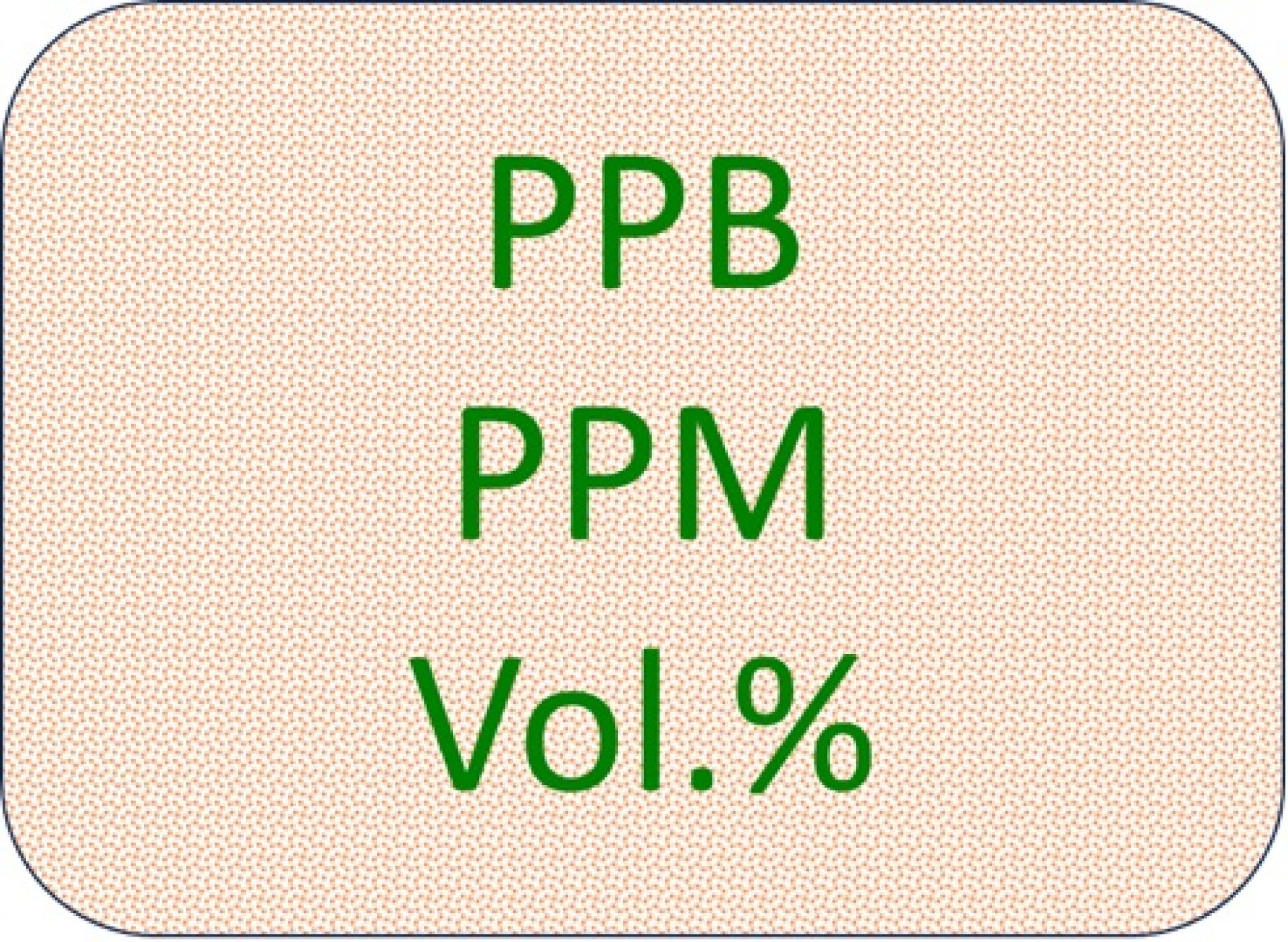
Measuring the concentration of substances in air, water, or other materials is crucial in various fields such as industry, chemistry, and environmental science. Commonly used units include PPB (Parts Per Billion), PPM (Parts Per Million), and Vol.% (Volume Percent). Each has its meaning and specific applications, as explained below:
1. PPM (Parts Per Million)PPM means "parts per million." It is a unit of measurement indicating the number of parts of a substance in a million parts of the medium. For example, if the concentration of carbon dioxide in the air is 400 PPM, it means there are 400 parts of carbon dioxide in 1,000,000 parts of air.
Applications:
- Used in the chemical industry to monitor the amount of toxic substances in water or air
- Applied in the food industry to control additives in food products
PPB means "parts per billion," offering a higher resolution than PPM. It is used to measure extremely low concentrations, such as detecting heavy metal contamination in water.
Example: If water contains 5 PPB of lead, it means there are 5 parts of lead in 1,000,000,000 parts of water.
Applications:
- Environmental monitoring, such as measuring toxic gas levels in the air.
- Purity testing of water and other materials.
3. Vol.% (Volume Percent)
Vol.% is a unit that expresses concentration as a percentage of volume. For example, 2 Vol.% of methane means there are 2 parts of methane in 100 parts of air (or 20,000 parts in 1,000,000 parts).
Applications:
- Used in industrial processes to monitor the concentration of gas mixtures
- Applied in chemical research to calculate the concentration of solutions
- PPB is suitable for measuring very low concentrations.
- PPM is used for general measurements at medium concentration levels.
- Vol.% is ideal for measurements that need to be expressed in percentage form.
PPB, PPM, and Vol.% are widely used units for measuring concentration across many fields. Choosing the appropriate unit depends on the concentration level and the specific requirements of the analysis. Understanding these differences enables accurate evaluation and quality control in various processes.
Related Content

The Portable Gas Detector is an essential device used to monitor and measure gas levels in the air to prevent potential hazards caused by gas leaks in workplaces or various environments. It plays a crucial role in protecting lives and property, particularly in industries dealing with chemicals, energy, and oil.
3 Dec 2024

Flammable gases are among the significant hazards in many industries, such as petrochemicals, energy production, and metal welding. These gases pose a particular risk when their concentration reaches the explosive range, defined by the LEL (Lower Explosive Limit), or the "lower limit of flammability."
28 Jan 2025
A Fixed Gas Detector is a device designed for continuous monitoring and detection of gas levels in specific areas. It is installed at locations prone to gas leaks or hazardous gas accumulation, playing a crucial role in ensuring safety in industries such as energy, petrochemicals, manufacturing, and food processing. This system protects lives and assets by minimizing risks in hazardous environments.
4 Dec 2024
