PLC Systems: The Pulsing Heart of Industry 4.0 Factories
In an era where manufacturing is driven by speed and precision, the PLC (Programmable Logic Controller) has become an indispensable standard. Often referred to as the "industrial brain," it controls the mechanical "limbs.
What is a PLC in a Factory Context?
A PLC is a ruggedized digital computer specifically designed to operate in harsh industrial environments. Unlike standard computers, it is built to withstand electromagnetic interference (EMI), heavy vibrations, and high temperatures. Its primary function is to read signals from sensors (Inputs), process them based on pre-programmed logic, and send commands to devices (Outputs) to maintain a systematic workflow.
Why Do Modern Factories Rely on PLCs?
The transition from traditional Relay Control systems to PLCs marked a major turning point in three key areas:
- Production Flexibility:
In the past, changing a production sequence required manual rewiring of the control panel. With a PLC, engineers simply modify the software code (such as Ladder Diagram logic), and the machine can switch to a new operational mode instantly. - Rapid Diagnostics & Troubleshooting:
Modern PLCs feature error codes and LED status indicators that immediately pinpoint sensor failures or broken wires. This significantly reduces Downtime, saving factories from costly production halts. - Connectivity & IIoT (Industrial Internet of Things):
Today’s PLCs no longer work in isolation. They connect to networks via protocols like Ethernet/IP or PROFINET to send production data to SCADA systems or the Cloud. This allows management to monitor real-time production metrics from anywhere in the world.
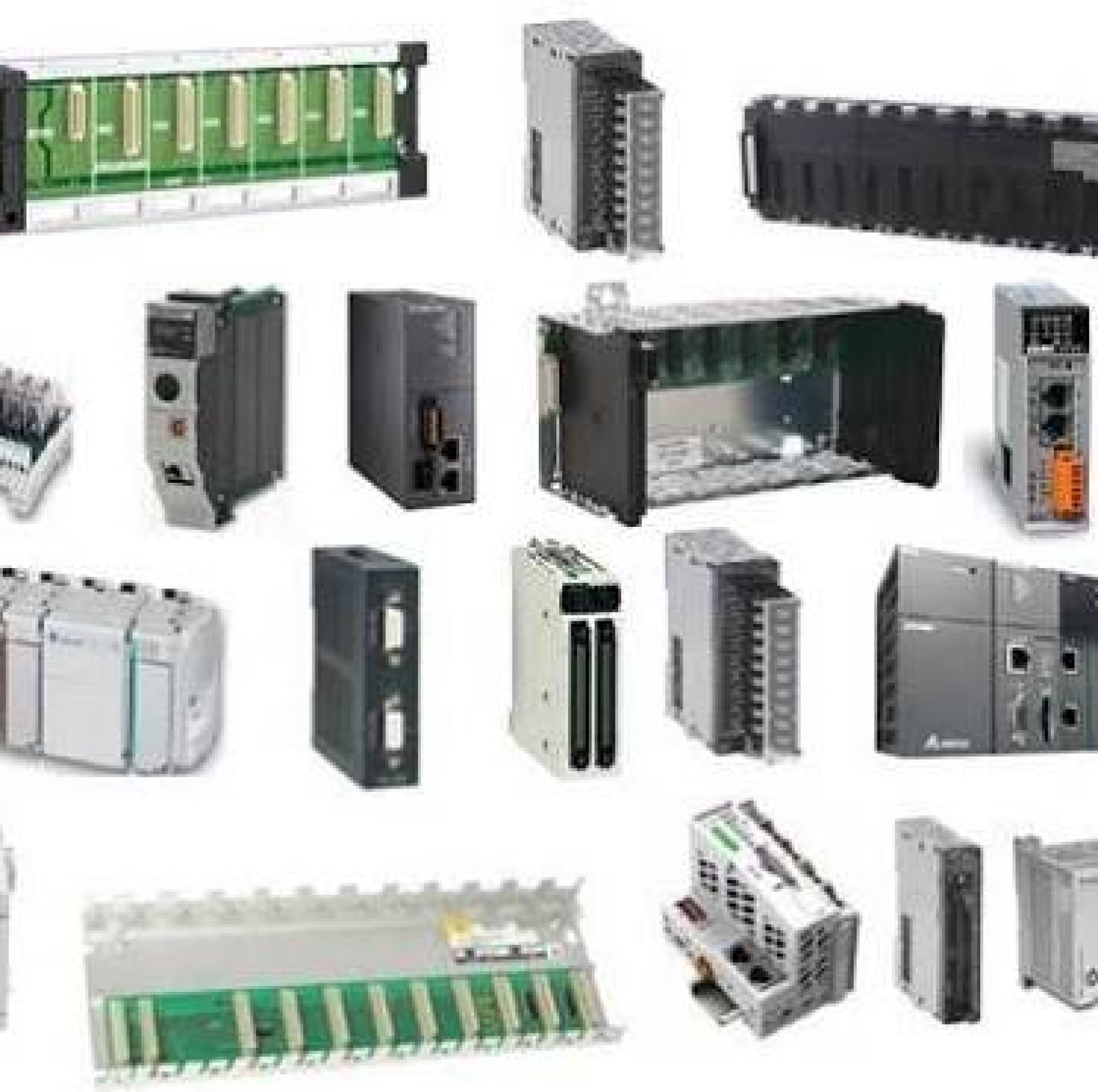
To function seamlessly, a PLC system generally consists of these key modules:
- CPU Unit: The central processing unit that stores the program and executes logic decisions.
- Digital/Analog Inputs: Receives signals from pushbuttons, limit switches, temperature sensors, or pressure transducers.
- Digital/Analog Outputs: Sends command signals to drive motors, pneumatic cylinders (Solenoid Valves), or signal towers.
- Communication Module: Enables the PLC to "talk" to other controllers or interface with a touchscreen (HMI - Human Machine Interface).
Real-World Applications
- Packaging Systems: The PLC synchronizes conveyor speed with product dispensing and uses sensors to verify the box is full before sealing.
- Wastewater Treatment: Automatically controls pumps based on float switch levels and calculates chemical dosing according to measured pH values.
- Automotive Industry: Orchestrates robotic welding arms with sub-millimeter precision to ensure structural integrity and consistency.
Conclusion
A PLC system is more than just a controller; it is the fundamental infrastructure that enables a factory to become a Smart Factory. The combination of programmability and extreme reliability ensures that PLCs remain a cornerstone of engineering. Even as AI becomes more prevalent, the PLC remains the most trusted final executor in the production line.