Interlock vs Lockout Tagout: Key Differences in Industrial Safety Systems
In industrial environments, ensuring the safety of workers and controlling machinery are top priorities. Two important systems that help prevent accidents are Interlock and Lockout Tagout (LOTO). While both aim to protect personnel, they operate in different ways. This article will explain the differences between Interlock and LOTO clearly and concisely
What Is an Interlock System?
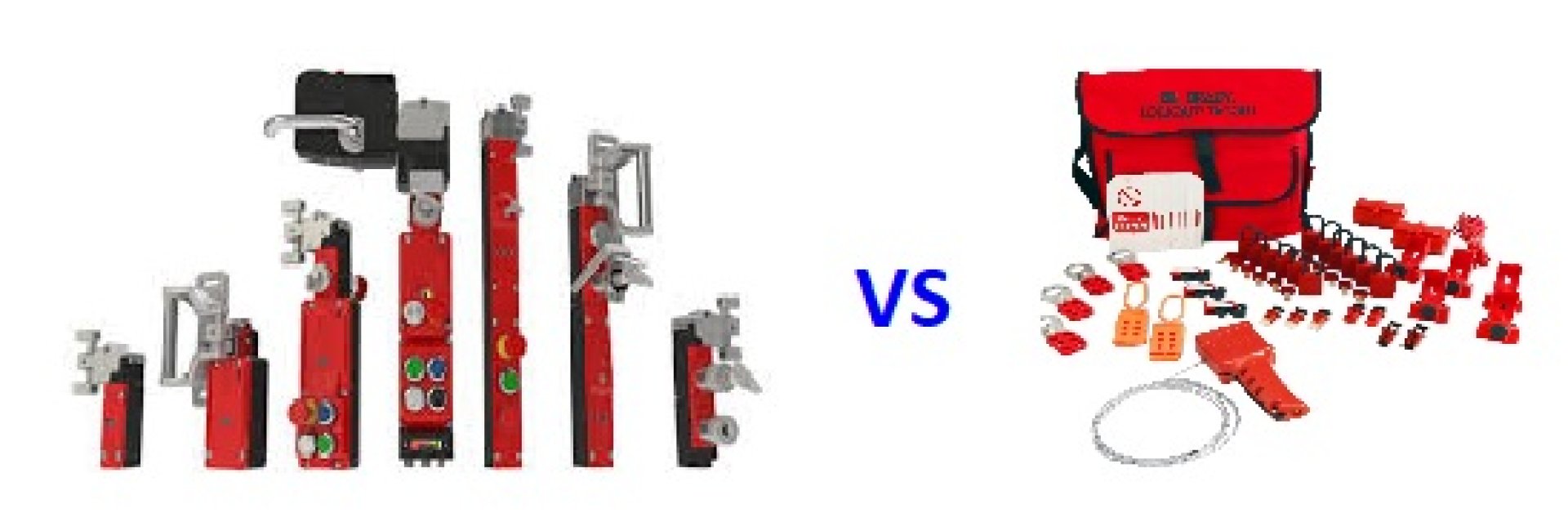
An interlock is an engineering control system designed to prevent a machine or equipment from operating when unsafe conditions are present. This system usually functions automatically by using sensors or electrical control units to detect conditions before allowing the machine to start or continue running.
Examples of interlock systems:
- Safety doors that must be fully closed before a machine operates
- Switches that stop machine operation when a cover is opened
Advantages of interlocks:
- Operate automatically with speed and precision
- Minimize risks caused by human error
- Improve efficiency in continuous production environments
What Is Lockout Tagout (LOTO)?
Lockout Tagout (LOTO) is a manual safety procedure used to control hazardous energy sources during maintenance, repair, or cleaning. Workers shut off energy sources such as electricity, compressed air, or hydraulics, then secure the switch or valve with a personal lock and attach a tag that indicates who is performing the work.
Basic steps of LOTO:
1. Shut down the machine and its power source
2. Lock the energy-isolating device with a personal padlock
3. Attach a tag with the responsible person’s name and status of the work
4. Verify that all energy has been isolated
5. Remove the lock and tag only after the work is safely completed
Advantages of LOTO:
- Prevents unauthorized or accidental machine startups
- Increases individual accountability
- Follows globally recognized safety standards
Key Differences Between Interlock and LOTO
| Aspect | Interlock | LockOut Tagout (LOTO) |
| Type | Automated system | Manual Procedure |
| Usage | Used during machine operation | Used during maintenance or shutdown |
| Dependence | Not dependent on human action | Relies on worker implementation |
| Safety Scope | Immediate protection in real-time | Ensures safety during maintenance |
| Tools Required | Sensors, Switches, PLCs | Padlocks, warning tags |
Which One Should You Use?
Choosing between Interlock and LOTO depends on the nature of the task and associated risks:
- For continuous production safety, interlocks are the ideal solution.
- For maintenance or energy isolation tasks, LOTO is essential.
In many cases, facilities use both systems together to provide the highest level of safety.
Conclusion
Both Interlock and Lockout Tagout play critical roles in industrial safety. Despite their differences in operation, their shared goal is to protect people and property from the dangers of machinery. Understanding how and when to use each system effectively can significantly reduce risks in the workplace.